HTML (HyperText Markup Language) is the standard markup language
used to create and structure web pages. It provides the basic framework of a
website by organizing content such as headings, paragraphs, images, links,
tables, forms, and multimedia. HTML uses elements, represented by tags enclosed
in angle brackets, to define the purpose and layout of different parts of a webpage. Although HTML determines the structure of a page, it does not control its appearance or behavior. For styling, HTML is commonly used with CSS (Cascading Style Sheets), while JavaScript adds interactivity and dynamic functionality. Together, these three technologies form the foundation of modern web development, making HTML an essential skill for anyone interested in creating websites or web applications.
| Coloumn 1 | Coloumn 2 | Coloumn 3 |
|---|---|---|
| Coloumn 1 | Coloumn 2 | Coloumn 3 |
| Coloumn 1 | Coloumn 2 | Coloumn 3 |

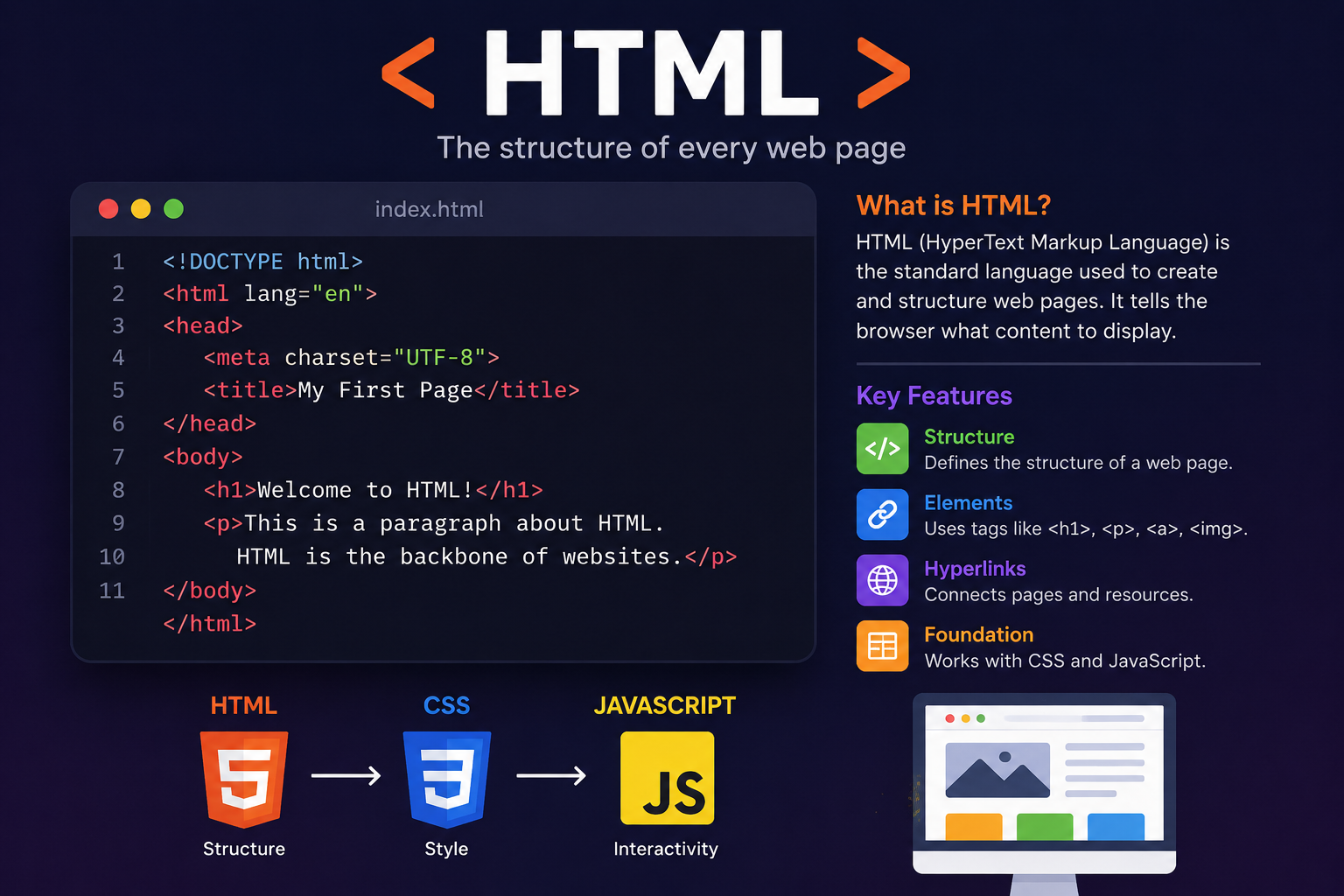
HTML (HyperText Markup Language) is the standard markup language used to create and structure web pages. It provides the basic framework of a website by organizing content such as headings, paragraphs, images, links, tables, forms, and multimedia. HTML uses elements, represented by tags enclosed in angle brackets, to define the purpose and layout of different parts of a webpage. Although HTML determines the structure of a page, it does not control its appearance or behavior. For styling, HTML is commonly used with CSS (Cascading Style Sheets), while JavaScript adds interactivity and dynamic functionality. Together, these three technologies form the foundation of modern web development, making HTML an essential skill for anyone interested in creating websites or web applications.
HTML (HyperText Markup Language) is the standard markup language used to create and structure web pages. It provides the basic framework of a website by organizing content such as headings, paragraphs, images, links, tables, forms, and multimedia. HTML uses elements, represented by tags enclosed in angle brackets, to define the purpose and layout of different parts of a webpage. Although HTML determines the structure of a page, it does not control its appearance or behavior. For styling, HTML is commonly used with CSS (Cascading Style Sheets), while JavaScript adds interactivity and dynamic functionality. Together, these three technologies form the foundation of modern web development, making HTML an essential skill for anyone interested in creating websites or web applications.